Quick Answer
When green buildup keeps returning to one wall, that wall stays damp longer than the rest of the house. The usual reasons are shade, plants touching the siding, sprinkler spray, and gutter overflow. Worn or damaged siding makes it worse because it holds dirt and moisture. Washing removes the growth, but it tends to return to the same wall until the moisture source changes.
Muscogee is a wooded part of northwest Escambia County, and many homes sit under tall pines and hardwoods. On these lots it is common for one side of a house to stay fairly clean while another turns green within a season or two.
That green film is usually algae or mildew, and it follows moisture. As the EPA’s guide to mold and moisture puts it, the key to mold control is moisture control. So the useful question is not what the growth is, but why that wall stays wet.
That green film is usually algae or mildew, and it follows moisture. As the EPA’s guide to mold and moisture puts it, the key to mold control is moisture control. So the useful question is not what the growth is, but why that wall stays wet.
Where Green Buildup Shows Up on Siding
The pattern on the wall usually points to the cause:
| Pattern on the wall | Likely moisture source | What to change |
|---|---|---|
| Even coverage across one wall | Shade; the wall rarely gets direct sun | Thin branches where practical to let in light and air |
| Heaviest directly behind shrubs or vines | Plants holding humidity against the siding | Trim plants back so air can move behind them |
| A curved band at mid-height | Sprinkler spray reaching the house | Adjust or replace the heads hitting the wall |
| Vertical streaks under a gutter corner or roof valley | Gutter overflow or roof runoff | Clear gutters; check seams and downspout flow |
| Bottom course or window ledges | Splashback, damp mulch, or water sitting on ledges | Pull mulch back; keep ledges and sills clear |
Shade is the hardest to change and the most common. North-facing walls get the least sun, but under a heavy canopy any wall can stay shaded most of the day. Sprinklers are often the easiest fix. The UF/IFAS Florida-Friendly Landscaping program has practical guidance on setting irrigation so water lands on plants rather than the house.
Check the Siding Itself
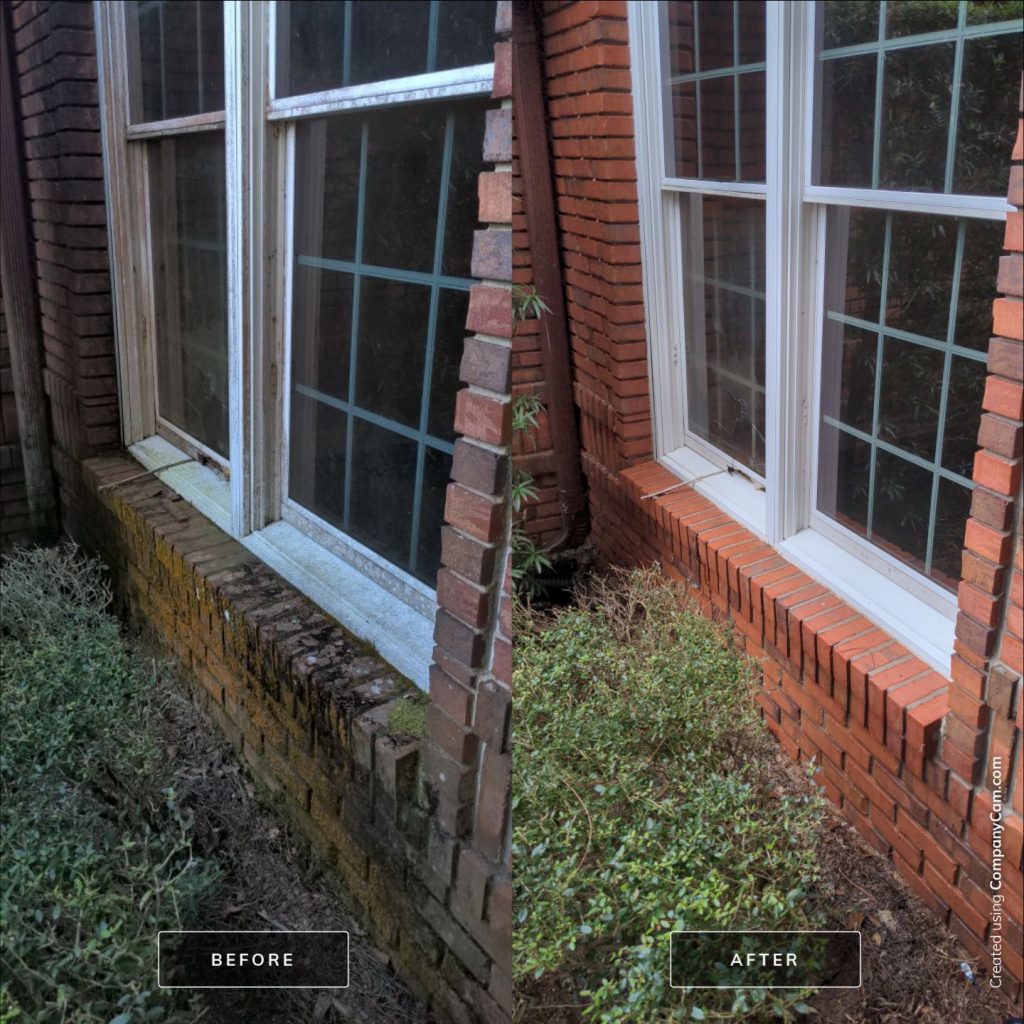
Siding condition affects how fast growth returns. Weathered or chalking paint, rough surfaces, open caulk joints, and ledges such as brick sills hold dirt and moisture longer than a sound, smooth surface.
Look closely at the green wall for siding that is soft, warped, loose, or cracked. Those signs can mean water is getting behind the siding. That is a repair for a siding contractor, and washing will not solve it.
Look closely at the green wall for siding that is soft, warped, loose, or cracked. Those signs can mean water is getting behind the siding. That is a repair for a siding contractor, and washing will not solve it.
What to Do Before the Next Wash
- Trim shrubs and vines away from the affected wall.
- Run each irrigation zone and redirect any heads that reach the house.
- Clear the gutters above the green area and confirm the downspouts carry water away from the wall.
- Pull mulch and soil back from the lowest siding course.
- Note any soft, loose, or damaged siding so it can be repaired.
Cleaning the Wall
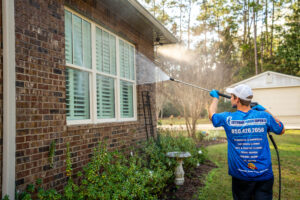
On most siding, organic growth is removed with a low-pressure soft wash rather than high pressure, which can force water behind lap siding or damage paint. Our guides to surfaces that can be pressure washed safely and choosing a cleaning method for each surface cover method by material, and DIY pressure washing vs. hiring a pro covers doing it yourself.
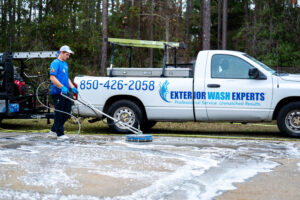
Exterior Wash Experts cleans siding with a soft wash process as part of our house washing service. How long a wall stays clean afterward depends on what changes around it, so we do not quote a fixed schedule without seeing the property.
Exterior Wash Experts cleans siding with a soft wash process as part of our house washing service. How long a wall stays clean afterward depends on what changes around it, so we do not quote a fixed schedule without seeing the property.
Frequently Asked Questions
Does green growth mean my siding is damaged?
Not usually. On sound vinyl, brick, or fiber cement it is mostly a surface problem. It can hide soft wood or failing paint, though, and those are easier to spot once the wall is clean.
Should I fix the moisture source before or after washing?
Trimming plants and adjusting sprinklers before the wash means the clean wall dries faster from the start. Gutter or siding repairs can happen either way, and a clean wall can make damage easier to see.
Can I paint over the green?
Paint manufacturers generally call for a clean surface free of mildew and dirt before painting. Painting over growth can lead to poor adhesion, and the growth can show through again.
If your home has white film or dark spots instead of green growth, read our guide to salt residue and mildew on Warrington home exteriors.
Request an Estimate
If one wall of your Muscogee home keeps turning green, request an estimate online or call (850) 426-2058.