Quick Answer
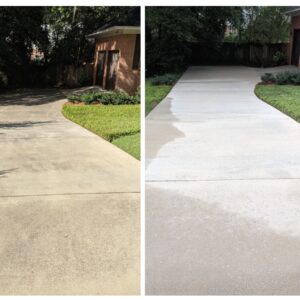
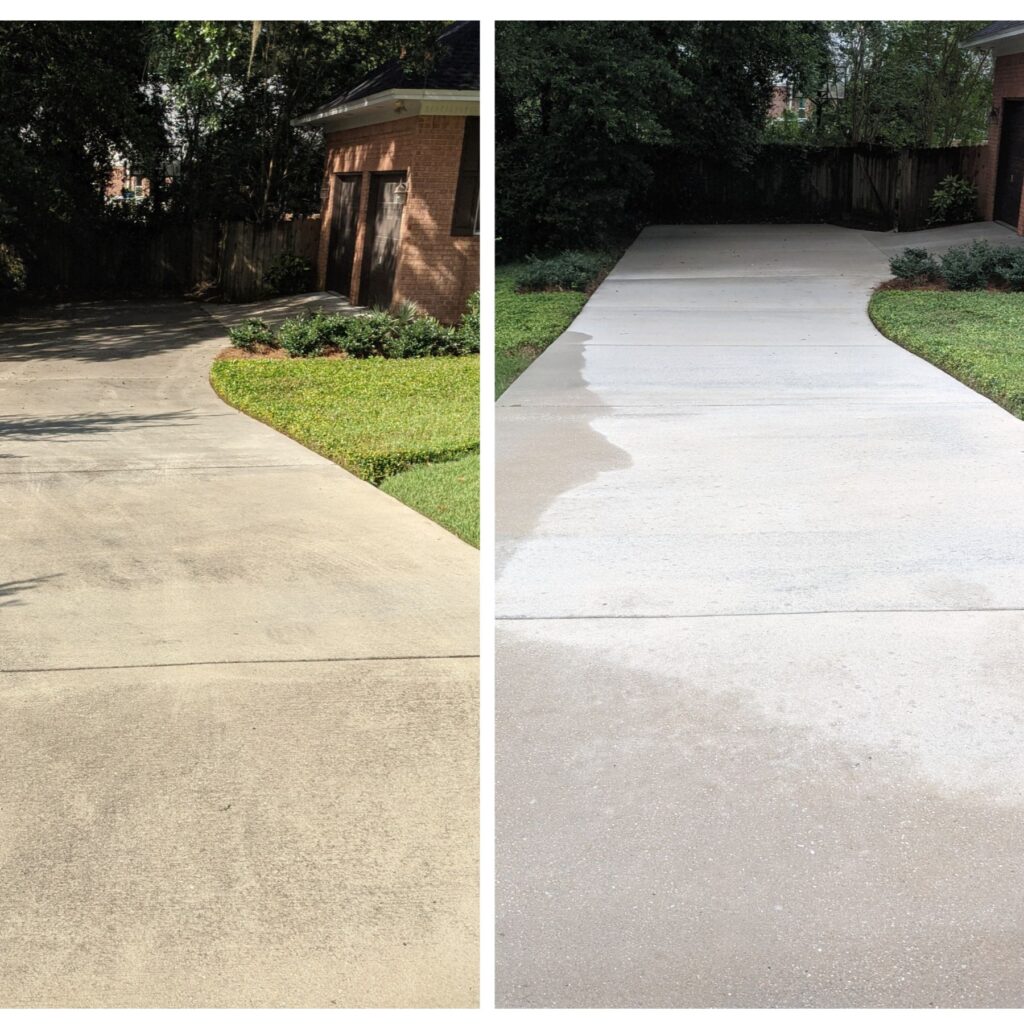
If sediment stains keep returning to the same part of your driveway after rain, water is carrying soil onto the concrete from somewhere uphill. Loose deposits usually wash off. Staining that remains after a proper cleaning has settled into the surface and may only lighten. Lasting improvement depends on stopping the runoff, which can be a job for a landscaper or drainage contractor rather than more washing.
Lots around Avalon Beach in Santa Rosa County vary in slope, soil, and landscaping. The sediment on a driveway might be sandy topsoil, fine mulch, clay-rich fill, or dirt from a nearby build site. The color matters less than the pattern: where the film lands and whether it keeps coming back.
Trace the Runoff First
- During a steady rain, watch where water enters the driveway.
- Follow the film uphill to its edge. Note whether it starts at a bed, lawn, bare soil, downspout, or the neighboring lot.
- Check for downspouts emptying onto beds or bare ground above the driveway.
- Look for bare soil, washed-out mulch, or eroded edges along the slab.
Most sources come down to bare soil and concentrated water. The UF/IFAS Florida-Friendly Landscaping guidance on reducing runoff covers practical fixes such as keeping soil covered and directing roof water to areas where it can soak in.
Loose Deposits vs. Set-In Sediment Stains
| Sign | Loose deposit | Persistent stain |
|---|---|---|
| How it looks | Grit or soil sitting on top of the concrete | A tint in the concrete with no texture |
| After sweeping and a hose rinse | Mostly comes off | Stays |
| After a professional cleaning | Usually removed | Often lightens; may not fully disappear |
Concrete is porous. Fine particles carried in water settle into the surface, especially on older or weathered concrete. How much a set-in stain lightens depends on how long it has built up and on the concrete itself, so no one can promise a specific result before cleaning.

When to Call a Landscaper or Drainage Contractor
Washing resets the surface. It does not change where water goes. Bring in another trade when:
- Water crosses the driveway from a bed or yard after most storms
- Soil along the driveway is bare or eroding
- A downspout discharges onto soil above the driveway
- The sediment comes from a slope or the neighboring property
- Water stands on the driveway after rain
A landscaper can stabilize soil with plants, mulch, or edging. A drainage contractor can regrade, add a swale or drain, or reroute downspouts.
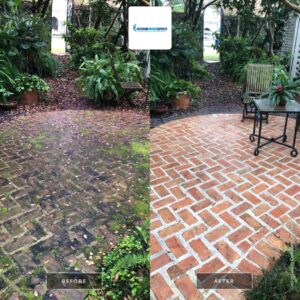
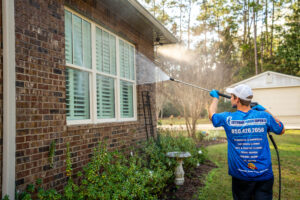
Our driveway and concrete cleaning service removes surface deposits and can lighten set-in staining. If runoff still reaches the driveway, the film will return with heavy rain.
Frequently Asked Questions
Should I clean the driveway before or after fixing the drainage?
After, if you can. Cleaning first is fine if you need the driveway clean now, but expect the film to return until the runoff is addressed.
Will sealing the driveway stop sediment stains?
A sealer can reduce how much the concrete absorbs, which can make deposits easier to rinse off. It does not stop runoff, so sediment will still arrive.
Can I just hose it off myself?
Fresh, loose deposits often rinse off. Sweep dry grit first so you are not pushing it into joints and cracks. Film that stays after rinsing has likely set into the surface.
Orange marks that stay after washing are a different problem. Read our guide to orange stains on Milton driveways.
Request an Estimate
If sediment keeps returning to your Avalon Beach driveway, request an estimate online or call (850) 426-2058.