


A patio is supposed to feel like the “easy” part of your home—coffee outside, friends over, a place to breathe. But in Pensacola, FL, patios collect grime fast. Humidity, shade, pollen, and regular foot traffic can leave concrete or pavers looking dark, patchy, and slick.
Power washing can bring it back, but patios are also where DIY mistakes show up the most: zebra stripes, etched concrete, blown-out joint sand, and overspray on screens or furniture. This guide walks you through a safer, cleaner way to do it, and helps you decide when it’s smarter to call a pro.
Before you start: pick the right day and set expectations
Choose a dry day with mild sun and low wind if possible. In Pensacola, FL, wind can push mist onto windows and doors, and sudden rain can mess with drying and final results.
Also, patios that haven’t been cleaned in a long time may not look perfect after one pass. Deep organic buildup sometimes needs pre-treatment or a second, gentler round rather than a single aggressive blast.
Step 1: Clear and protect the area
Move everything off the patio:
- Furniture, grills, plants, rugs, toys
- Anything leaning on walls (brooms, décor, storage bins)
Then protect what can’t move:
- Cover outlets, door hardware, and delicate light fixtures
- Close windows and doors tightly
- If you have a screened patio, keep the spray away from the mesh to avoid tearing
A clean setup makes the actual washing easier and prevents “accidents” that are common when you’re rushing.
Step 2: Sweep first (don’t skip this)
Sweeping removes grit and debris that can scratch surfaces when water pushes it around. In Pensacola, FL, patios often hold fine sand and pollen; if you don’t sweep, you can end up dragging that grit across the surface and leaving faint marks.
Sweep corners, edges, and cracks where debris sits, especially near doors and along the foundation line.
Step 3: Pre-treat stains and organic growth
If you see:
- Green film (algae)
- Dark patches that stay damp-looking
- Rust marks
- Grease near a grill
Pre-treating helps you avoid using too much force later.
Use a patio-safe cleaner and let it sit (dwell) for a few minutes, following the label instructions. In Pensacola, FL, organic growth responds well to the right solution plus time. That combo is usually more effective than trying to “erase” it with maximum pressure.
Rinse lightly before you begin full washing so you’re not blasting chemicals into landscaping.
Step 4: Set up your equipment correctly
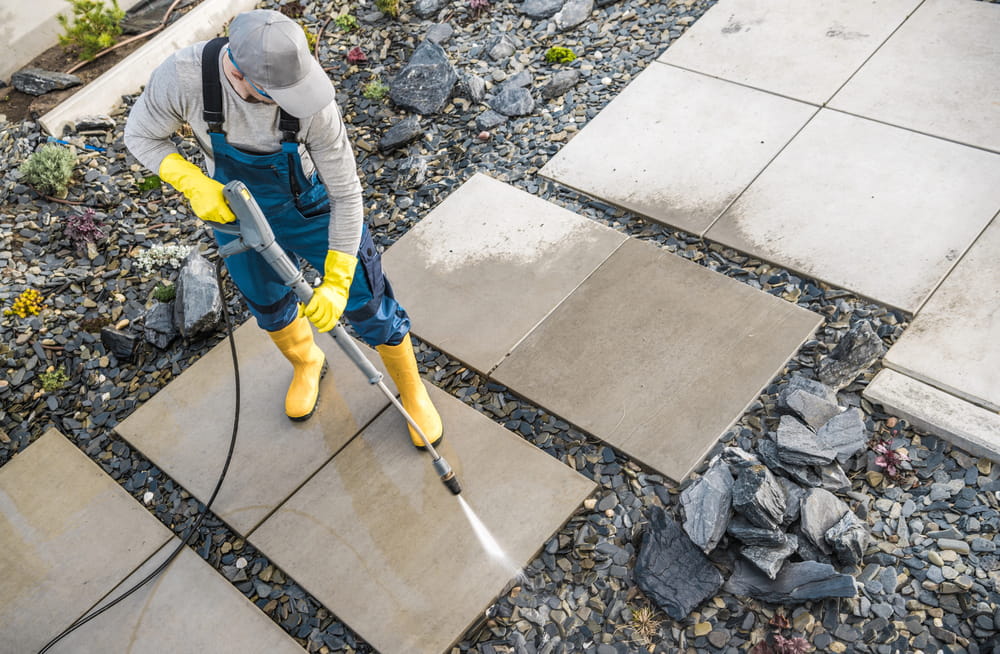
If you’re using a pressure washer, start with a wider nozzle (like a 25° or 40° tip) and test a small area first. The goal is to clean evenly, not carve the surface.
General tips:
- Keep the wand moving—no lingering in one spot
- Maintain a consistent distance from the surface
- Work in straight lines, overlapping slightly
If you’re cleaning pavers, be careful: too much force can remove joint sand and create uneven gaps. Many patios in Pensacola, FL, look best when cleaned with a controlled approach rather than maximum intensity.
Step 5: Wash in sections (the “even finish” method)
This is the difference between a patio that looks professional and one that looks streaky.
- Start at the far end and work toward the exit
- Divide the patio into manageable sections (think 4×4 or 6×6 feet)
- Use slow, overlapping passes in one direction
- Avoid randomly hopping around—this creates visible lines
If you notice striping, don’t panic. Often, it’s just uneven drying. Finish the whole section, then do a light, even rinse pass across that area to blend.
Step 6: Rinse thoroughly and check edges
After the main wash, rinse the entire patio with a wide spray pattern. Pay attention to edges and corners; cleaner residue can collect there.
In Pensacola, FL, patios near gardens can also trap runoff. Make sure water is flowing away from doors and not pooling near the foundation. If you see foam or discoloration, keep rinsing until the runoff looks clear.
Step 7: Let it dry fully before putting things back
Give the patio time. Wet concrete and pavers can hide remaining stains, and moving furniture back too early can leave marks.
A simple rule: wait until it looks evenly dry in both sunny and shaded spots. In Pensacola, FL, shaded areas may take longer, especially after humid days.
Common patio mistakes to avoid
- Using too narrow a nozzle and etching concrete
- Holding the wand too close for too long
- Skipping pre-treatment and overcompensating with force
- Blasting paver joints and losing sand
- Spraying upward at doors, screens, or wall seams
If any of these feel familiar, your patio may be a good case for professional help—especially if you’re trying to get it photo-ready for guests or a home sale.
When it’s worth calling a pro
If your patio has heavy staining, delicate finishes, or pavers that need re-sanding, bringing in Exterior Wash Experts can save you time and prevent expensive damage. Their team provides pressure washing services in Pensacola, FL, and can recommend the safest method for your specific surface.
Close the loop: go back to the start of the silo
If you want to understand what’s true (and what’s exaggerated) about exterior cleaning, the first post in this series is a must-read: Pressure Washing Myths Debunked for Pensacola Homeowners.