


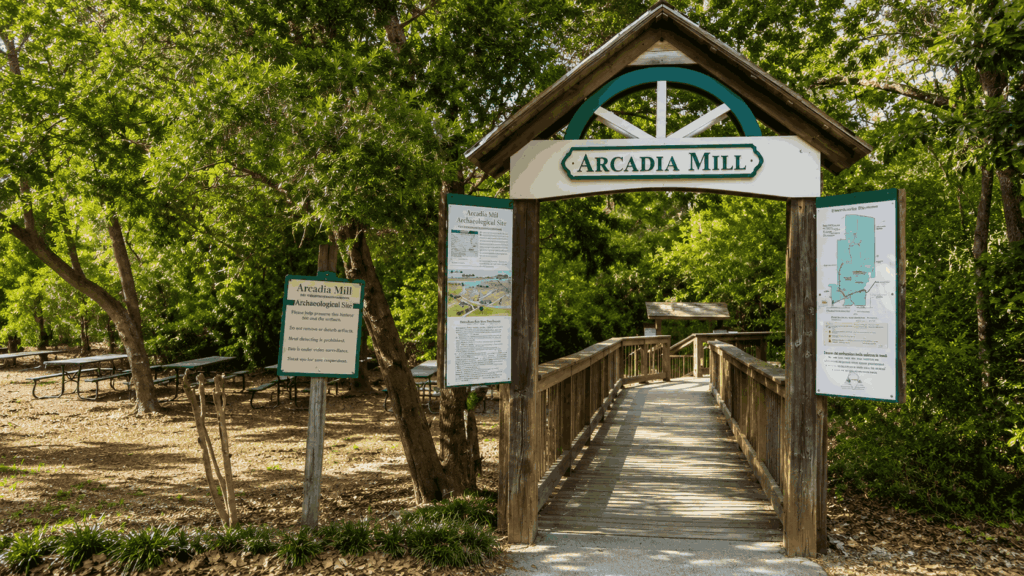
A quiet pine forest in Milton, FL, holds the remains of one of Northwest Florida’s most important early industrial centers. At first glance, the peaceful boardwalks and wooded surroundings may not look like the site of a once-busy operation. Look closer, however, and Arcadia Mill reveals a fascinating story of machinery, transportation, labor, and regional growth.
Located a convenient drive from Pensacola, FL, the site offers a thoughtful alternative to the area’s beaches and waterfront attractions. Visitors can explore archaeological remains, learn how water powered an entire industrial complex, and better understand the people whose work helped shape the Florida Panhandle.
For history enthusiasts, families, and curious travelers, this destination makes the past feel tangible without requiring an exhausting day of sightseeing.
Why Arcadia Mill Matters
The Arcadia Mill Archaeological Site preserves the remains of Florida’s first and largest early American water-powered industrial complex. The operation included mills, workshops, a mule-drawn railroad, and a log flume that extended approximately 16 miles. Although the industrial complex operated for only 38 years, from 1817 until 1855, it influenced the economic and political development of Northwest Florida.
This history makes the site particularly valuable. Instead of focusing only on prominent individuals or major battles, Arcadia Mill examines how communities worked, produced materials, transported resources, and supported a growing regional economy.
Visitors from Pensacola, FL can gain a broader picture of local history by seeing how inland industries were connected to settlements, waterways, and commercial activity throughout the region.
What the Industrial Complex Produced
Arcadia was much more than a single sawmill. At different points in its history, the complex included lumber operations, a textile mill, a gristmill, workshops, and supporting infrastructure.
Water was central to the operation. The mill used the movement of water to power machinery at a time when electricity and modern engines were unavailable. Logs and other raw materials had to be collected, transported, processed, and prepared for use or sale.
The scale of this activity helps explain why the complex became so influential. Milton, FL, was surrounded by natural resources, including timber and waterways, making the area suitable for early industry.
Walking through the site today requires some imagination because the original buildings no longer dominate the landscape. Interpretive information and archaeological evidence help visitors picture the noise, movement, and physical labor that once filled the property.
Exploring the Museum and Visitor Center
A visit often begins at the visitor center, where exhibits introduce the industries, workers, and technology connected to Arcadia Mill. The displays provide useful context before visitors head outdoors.
Seeing artifacts and historical explanations first makes the archaeological remains easier to understand. Instead of viewing the foundations as disconnected bricks or depressions in the earth, visitors can begin to recognize where buildings, machinery, and work areas once stood.
The visitor center is located at 5709 Mill Pond Lane in Milton, FL. It includes museum exhibits, visitor amenities, and access to the outdoor areas. Current operating information should be checked before traveling because indoor access is more limited than access to the grounds.
Travelers coming from Pensacola, FL, should confirm the schedule if seeing the exhibits is an important part of their plans.
Walking the Elevated Boardwalk
One of the most enjoyable features of the property is its elevated boardwalk. It passes through the wooded landscape and allows visitors to view archaeological remains without disturbing sensitive areas.
The accessible boardwalk creates a relaxed walking experience for people who may not want a long or difficult hike. Along the route, interpretive panels explain important features and help connect visible remains to the original industrial complex.
Because the property covers approximately 42 acres, the setting feels spacious and removed from heavy traffic. Pine forests surround much of the site, creating a calm atmosphere that contrasts with the industrial activity once found there.
For visitors staying in Pensacola, FL, the boardwalk provides an opportunity to combine history with time outdoors. Comfortable walking shoes are still recommended, especially after rain or during warmer months.
Archaeology That Continues to Tell the Story
Arcadia Mill is not simply a preserved historic attraction. It has also served as an active learning environment for archaeologists and students.
Since 2009, the University of West Florida Archaeological Field School has used the property to teach survey methods, excavation, documentation, and other field techniques. These investigations help researchers understand how the complex was organized and how people lived and worked there.
Archaeology is especially important because historical records do not always tell the entire story. Objects, foundations, soil changes, and other physical evidence can reveal details that were not documented in writing.
This continuing research gives visitors a reason to see Arcadia Mill as an evolving historical resource. New findings can add detail to what is known about Milton, FL, and its role in Northwest Florida’s development.
Remembering the People Behind the Industry
The story of Arcadia Mill includes business owners and technological achievements, but it also involves the labor of many workers. Industrial growth depended on people performing physically demanding tasks, often under conditions that were difficult or unequal.
Understanding the site responsibly means recognizing the contributions of enslaved laborers and other workers whose experiences may be less visible in traditional historical narratives.
Visitors should take time to read the interpretive materials rather than focusing only on machinery and production. Doing so creates a fuller understanding of how the complex operated and who made that work possible.
For families visiting from Pensacola, FL, this can lead to meaningful conversations about whose stories are preserved, how historians uncover missing perspectives, and why archaeology remains important.
Planning a Comfortable Visit
The outdoor grounds, including the boardwalk and pavilion, are generally open from sunrise to sunset throughout the year. The visitor center and Arcadia Homestead currently have more limited operating days and hours, so checking the official schedule before departure is essential.
Spring and fall often provide the most comfortable conditions for exploring Milton, FL. Summer visitors should arrive earlier in the day, carry water, wear sunscreen, and prepare for humidity.
Allow enough time to read the displays instead of rushing through the property. History becomes far more interesting when visitors pause to connect each feature with the larger story.
After exploring the site, continue discovering Northwest Florida with Best Things to Do at Big Lagoon State Park Near Pensacola, the next article in this local series.
Preserving Welcoming Outdoor Spaces
Historic sites demonstrate how much regular maintenance matters. Walkways, entrances, exterior walls, and public gathering spaces all make a stronger impression when they are kept clean and cared for.
Homeowners and businesses can apply the same principle to their own properties. Exterior Wash Experts provides professional pressure washing in Pensacola, FL, for concrete, driveways, siding, and other outdoor surfaces affected by dirt and buildup.
Discover a Different Side of Northwest Florida
Arcadia Mill offers more than a walk through the woods. It helps visitors understand the industries, technology, labor, and natural resources that contributed to the growth of Milton, FL, and surrounding communities.
Its museum, boardwalk, archaeological remains, and ongoing research make it a rewarding day trip from Pensacola, FL. By slowing down and looking closely, visitors can discover a complex history hidden beneath one of Northwest Florida’s most peaceful landscapes.