


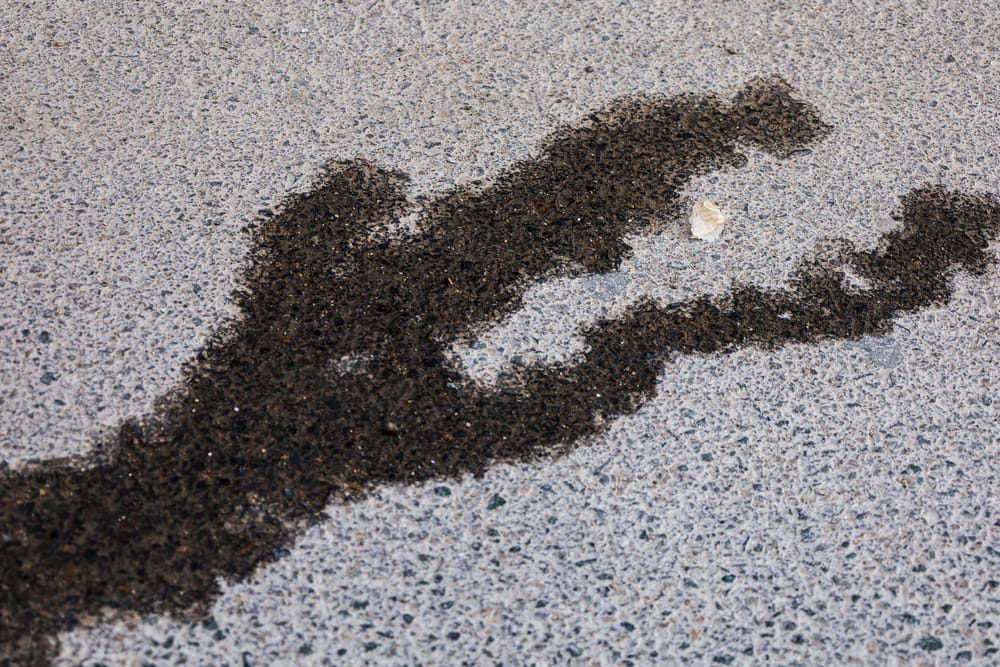
An oil stain can make an otherwise clean driveway look neglected. It may begin as a small dark patch beneath a vehicle, then spread as tires, rain, and foot traffic carry the residue across the concrete. Homeowners often reach for a hose or household cleaner first, only to find that the discoloration remains.
Pressure washing can significantly improve many oil-stained driveways, but the outcome depends on the stain’s age, depth, and previous treatment. Understanding what the process can accomplish helps homeowners choose the right approach and avoid damaging the concrete.
Why Oil Stains Are Difficult to Remove From Concrete
Concrete looks solid, but its surface contains small pores that absorb liquids. When motor oil, transmission fluid, or another petroleum product spills, it can move beneath the visible surface instead of simply sitting on top.
Fresh spills are easier to address because less oil has penetrated the slab. Older stains have had more time to settle and attract dirt. In Pensacola, FL, warm weather can also keep vehicle fluids thin enough to spread before a homeowner notices the leak.
Rinsing alone rarely removes the full mark. Water may clear loose grime, but oil repels water and often requires a product that can break down the greasy residue first.
How Pressure Washing Helps With Oil Stains
Pressure washing uses a controlled stream of water to loosen contamination from durable surfaces. On a concrete driveway, it can remove dirt, loose oil, tire residue, and buildup surrounding the stain.
A professional may apply a degreaser or concrete-safe pretreatment before washing. The solution is given time to work into the affected area, helping release oily material from the pores. The driveway can then be cleaned evenly instead of blasting one dark spot repeatedly.
For properties in Pensacola, FL, this approach can also address algae, mildew, soil, and leaf marks. Cleaning the broader surface prevents the treated section from looking noticeably different from the rest of the driveway.
Can Every Oil Stain Be Removed Completely?
Not every stain disappears entirely. Pressure washing can produce a major improvement, especially when the spill is recent, but deeply absorbed oil may leave a faint shadow.
The age and type of fluid both matter. Concrete conditions are important as well. Older, cracked, unsealed, or highly porous slabs may absorb more material. Previous DIY attempts can also affect the outcome. Harsh chemicals, wire brushes, or excessive pressure may lighten the stain while leaving etching or texture changes.
A trustworthy provider should explain these limitations before starting. The goal is to achieve the best safe improvement, not promise that every old stain will vanish without a trace.
What to Do Immediately After an Oil Spill
Fast action gives you the strongest chance of avoiding a permanent mark. Begin by placing an absorbent material over the spill. Oil absorbent or clay-based cat litter can help pull up liquid that has not yet entered the concrete.
Avoid scrubbing the fresh spill immediately. Scrubbing can spread it across a larger area and push it deeper into the surface. Allow the absorbent material to work, then collect and dispose of it appropriately.
Once the excess oil is gone, evaluate what remains. A small fresh stain may respond to a concrete-safe degreaser, while a larger or older spill may require professional pressure washing. Acting quickly is especially helpful during hot weather in Pensacola, FL.
Why More Pressure Is Not Always Better
It is tempting to assume that maximum force will remove a stubborn stain faster. In reality, excessive pressure can damage concrete by stripping away the upper layer, exposing aggregate, or creating visible wand marks.
Holding the nozzle too close can leave pale lines that are more noticeable than the original oil spot. These risks increase with aging, cracked, decorative, or previously repaired driveways.
Professional pressure washing relies on the right combination of water pressure, nozzle selection, cleaning solution, dwell time, and consistent movement. The objective is to remove the contamination without changing the surface texture.
Should the Entire Driveway Be Cleaned?
Spot treatment may seem practical, but cleaning only the stain can create a bright patch surrounded by darker concrete. Driveways collect road dust, tire marks, pollen, algae, and airborne debris over time.
Cleaning the full driveway creates a more uniform appearance. It can also reveal whether the oil stain has genuinely improved or was simply hidden by surrounding grime.
For many homes in Pensacola, FL, a complete cleaning makes sense when the concrete has widespread discoloration or slippery organic growth. A professional can also inspect adjoining sidewalks and walkways to determine whether they should be cleaned at the same time.
Can Sealing Help Prevent Future Stains?
A suitable concrete sealer may reduce how quickly oil and other liquids penetrate the surface. It does not make a driveway stain-proof, but it can provide more time to absorb and clean a spill before it settles deeply.
The concrete should be thoroughly cleaned and allowed to dry before sealing. Applying sealer over remaining oil, moisture, or dirt can trap discoloration and interfere with adhesion.
Pressure washing is often an important preparation step, but sealing is a separate project with its own product, application, and drying requirements. The appropriate sealer may also depend on whether the driveway is plain concrete, decorative concrete, or previously coated.
Know When to Call a Professional
DIY equipment can be useful for light maintenance, but driveway stains require careful judgment. The wrong chemical can harm nearby landscaping or leave a bleached patch. Incorrect technique can also spread oily residue or permanently mark the slab.
Exterior Wash Experts uses customized cleaning methods tailored to the material being treated, ranging from durable concrete to more delicate exterior surfaces. Homeowners who need pressure washing in Pensacola, FL, can request professional help evaluating the stain and choosing an appropriate treatment.
Oil stains are only one of the exterior cleaning challenges. Next, learn how to address screens, frames, mildew, and nearby surfaces safely in How to Clean a Pool Enclosure in Pensacola Without Causing Damage.
A Cleaner Driveway Starts With the Right Expectations
Pressure washing can remove surface oil, reduce stubborn discoloration, and restore a more even appearance to a driveway. The strongest results usually come from early action, proper pretreatment, controlled equipment, and cleaning the surrounding concrete rather than attacking one spot with excessive force.
Some deeply embedded stains may remain faintly visible, but professional cleaning can still make a meaningful difference. By treating the material correctly, homeowners in Pensacola, FL can improve curb appeal without trading an oil mark for permanent surface damage.